
Hydraulic cylinders are the main actuators used in modern hydraulic systems. They convert hydraulic pressure into linear force and motion, allowing machines to lift, push, pull, clamp, tilt, and position heavy components with high precision.
Different applications require different cylinder designs. A construction excavator, a dump truck, an agricultural machine, and an industrial press all operate under different loads, stroke requirements, and installation conditions. Choosing the right cylinder type improves efficiency, service life, and maintenance costs.
This guide explains the most common types of hydraulic cylinders, how they work, where they are used, and how to select the right option for your equipment.
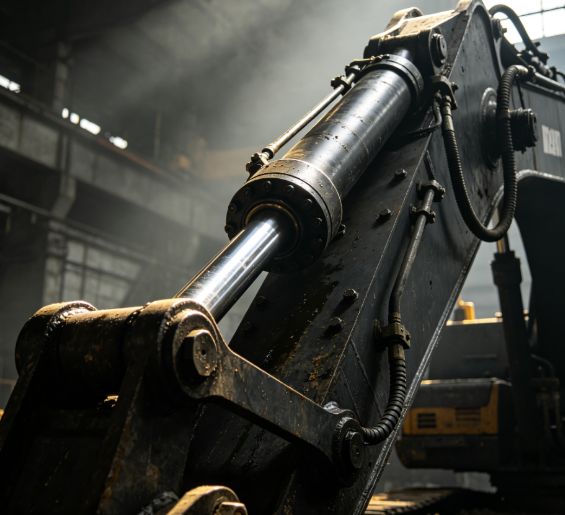
Hydraulic cylinders are linear actuators used in hydraulic systems to convert fluid pressure into linear force and motion. They provide the power needed to lift, push, pull, clamp, tilt, and position equipment in a wide range of industrial and mobile applications.
Whether operating construction machinery, agricultural equipment, manufacturing systems, or mining vehicles, hydraulic cylinders make controlled movement possible under demanding working conditions.
A hydraulic cylinder generates force when pressurized hydraulic oil acts on a piston inside the cylinder barrel. The piston then moves the piston rod, allowing the machine to perform its intended task.
Different applications require different cylinder designs. Factors such as available installation space, operating pressure, required stroke length, load capacity, and motion control all influence the selection of the appropriate cylinder type.
Although hydraulic cylinders come in many configurations, most share the same basic components.
The cylinder barrel houses the piston and hydraulic fluid. It must withstand continuous pressure while maintaining a smooth internal surface to reduce seal wear.
The piston separates the pressure chambers inside the cylinder and converts hydraulic pressure into mechanical force.
The piston rod transfers force from the piston to the external load. It is usually manufactured from hardened steel with a chrome-plated surface for wear and corrosion resistance.
The cylinder head and cap seal both ends of the barrel while supporting the rod and internal components.
High-quality seals prevent hydraulic oil leakage and help maintain system efficiency.
Ports allow hydraulic oil to enter and leave the cylinder during operation.
Several types of hydraulic cylinders are available, each designed for different working conditions.
A single acting hydraulic cylinder uses hydraulic pressure to move the piston in one direction only. The return movement is completed by gravity, a spring, or the weight of the machine itself.
Hydraulic oil enters one side of the cylinder.
Pressure pushes the piston outward.
Once pressure is released, gravity or another external force returns the piston to its original position.
A single acting hydraulic cylinder is commonly used for:
Large dump trucks frequently rely on single acting cylinders because the truck body naturally lowers under its own weight after unloading.
A double acting hydraulic cylinder uses hydraulic pressure for both extension and retraction.
Oil can enter either side of the piston, allowing the cylinder to extend and retract under full hydraulic control.
A double acting hydraulic cylinder is widely used in:
Whenever a machine needs controlled pushing and pulling, double acting cylinders are generally the preferred solution.
A telescopic hydraulic cylinder consists of multiple nested stages that extend sequentially.
Its biggest advantage is achieving a very long stroke while remaining compact when fully retracted.
Telescopic cylinders are widely used in:
Because of their compact design, telescopic cylinders are often selected for equipment where installation space is limited but long vertical travel is required.
Tie rod hydraulic cylinders use threaded steel rods to secure the end caps to the cylinder barrel.
They are widely used in industrial equipment because they are easy to assemble, service, and rebuild.
Tie rod hydraulic cylinders are commonly found in:
Unlike tie rod designs, welded cylinders have the end caps permanently welded to the barrel.
This construction provides a compact profile and excellent durability for mobile equipment.
Typical applications include:
One of the most common questions when selecting a hydraulic cylinder is whether to choose single acting or double acting designs.
| Feature | Single Acting Cylinders | Double Acting Cylinders |
|---|---|---|
| Hydraulic Power | One Direction | Two Directions |
| Return Motion | Gravity or Spring | Hydraulic Pressure |
| Hydraulic Ports | One | Two |
| Motion Control | Basic | Precise |
| Installation Cost | Lower | Higher |
| Maintenance | Simpler | Moderate |
| Common Uses | Dump Trucks, Jacks | Excavators, Industrial Equipment |
Single acting cylinders work well when gravity naturally returns the load.
Double acting cylinders are better suited for machines that require complete control throughout the operating cycle.
Selecting the right cylinder type depends on several engineering considerations.
Calculate the maximum force needed to move heavy loads safely.
A larger bore produces greater output force but also increases oil volume and equipment size.
The required stroke length determines how far the piston rod must travel.
Selecting excessive stroke increases cost and overall cylinder size, while insufficient stroke limits machine movement.
Machines with limited mounting space often benefit from telescopic cylinders, which provide a long stroke without requiring a long retracted length.
Higher operating pressure can reduce cylinder size while maintaining the required output force.
Always verify that the cylinder is designed for the system's maximum working pressure.
Common mounting options include:
Proper mounting minimizes side loading and improves service life.
Consider environmental conditions such as:
Appropriate sealing materials and surface treatments improve durability under demanding conditions.
Hydraulic cylinders are used across nearly every industry that requires controlled linear movement.
Construction machinery uses hydraulic cylinders for:
Most moving attachments depend on double acting cylinders for accurate positioning.
Transportation equipment commonly uses:
Large dump trucks often use telescopic hydraulic cylinders because they provide long lifting travel within a compact installation length.
Agricultural machinery uses hydraulic cylinders for:
Hydraulic systems simplify equipment adjustments and improve productivity during field operations.
Industrial facilities use hydraulic cylinders for:
Tie rod hydraulic cylinders remain one of the most common choices in factory automation.
Mining equipment requires cylinders capable of handling:
Heavy-duty welded cylinders are frequently selected for these applications.
The choice of materials directly affects durability and service life.
Common materials include:
A high strength piston rod improves resistance to bending, wear, and surface damage, especially in heavy-duty applications.
Routine maintenance helps reduce downtime and extends cylinder life.
Recommended maintenance practices include:
Scheduled inspections can identify wear before it develops into expensive repairs.
The most common types of hydraulic cylinders include:
Each design is intended for different applications and operating conditions.
Single acting cylinders use hydraulic pressure in one direction and rely on gravity or another external force for the return stroke.
Double acting cylinders use hydraulic pressure to extend and retract the piston, providing controlled movement in both directions.
A telescopic hydraulic cylinder is suitable when a machine requires a long stroke but has limited installation space.
It is widely used in dump trucks, cranes, refuse vehicles, and lifting equipment.
Yes. Tie rod hydraulic cylinders are widely used in industrial machinery and manufacturing equipment. They are easy to maintain and can handle demanding operating conditions when properly designed.
The required stroke length depends on the total travel needed by the machine. Measuring the full operating distance before selecting a cylinder helps avoid unnecessary size and cost.
The answer depends on the application.
For machines that require controlled movement in both directions, a double acting hydraulic cylinder is often the preferred option.
For vertical lifting equipment such as dump trucks, a large single acting telescopic cylinder is commonly used.
Hydraulic cylinders are available in several designs to meet different operating requirements. Single acting hydraulic cylinders offer a straightforward solution for lifting applications where gravity provides the return movement. Double acting cylinders deliver hydraulic power in both directions, making them suitable for equipment that requires accurate control. Telescopic hydraulic cylinders provide exceptional lifting height within compact installation space, while tie rod hydraulic cylinders remain a dependable choice for industrial machinery.
Understanding load requirements, available installation space, operating pressure, and required stroke length makes it easier to select the right cylinder. A well-matched hydraulic cylinder not only improves machine performance but also helps reduce maintenance and extend service life.


