
Hydraulic cylinders are among the most widely used actuators in modern hydraulic systems. They convert fluid power into linear force and motion, allowing machines to lift, push, pull, clamp, and position loads with accuracy and repeatability.
Although hydraulic cylinders share similar operating principles, their performance depends heavily on the materials used to manufacture each component. The strength of the cylinder barrel, the durability of the piston rod, and the quality of the sealing system all influence service life, operating efficiency, and maintenance requirements.
Whether designing equipment for construction, mining, agriculture, marine applications, or factory automation, selecting suitable materials helps hydraulic cylinders perform reliably under high pressure, heavy workloads, and demanding environments.
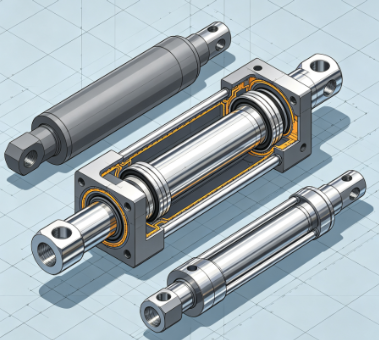
Before discussing materials, it is helpful to understand how a hydraulic cylinder operates.
A hydraulic cylinder uses pressurized hydraulic fluid supplied by a hydraulic pump. As hydraulic oil enters the cylinder, pressure acts on the piston, producing linear movement.
Depending on the design, the cylinder may extend only in one direction or move in both directions.
During operation:
Because every movement depends on hydraulic pressure, component materials must withstand repeated loading without excessive wear or deformation.
Every hydraulic cylinder contains several major components, each manufactured from materials selected for strength, wear resistance, and durability.
The cylinder barrel forms the body of the hydraulic cylinder and contains the piston and hydraulic fluid.
Typical materials include:
The barrel must resist internal pressure while maintaining a smooth surface for seal performance.
The piston rod transfers hydraulic force from the piston to the external load.
Most piston rods are manufactured from medium-carbon or alloy steel before receiving chrome plating.
Common rod materials include:
High-quality chrome-plated rods provide:
The piston is generally manufactured from:
Its design depends on pressure rating, bore diameter, and application.
Cylinder heads and caps are commonly produced from forged steel or cast steel, providing sufficient strength for high pressure applications.
Hydraulic seals prevent internal leakage and maintain pressure.
Common seal materials include:
Seal selection depends on:
Steel remains the common type of material used in hydraulic cylinder manufacturing because it combines strength, machinability, and cost efficiency.
Carbon steel offers:
It is commonly used for standard industrial cylinders.
Alloy steel contains additional elements such as chromium and molybdenum.
Advantages include:
Alloy steel is frequently used in construction, mining, and offshore equipment.
Some hydraulic cylinders operate in environments exposed to moisture, chemicals, or seawater.
Stainless steel provides excellent corrosion resistant properties and is commonly used in:
Although more expensive than carbon steel, stainless steel helps reduce corrosion-related maintenance.
One of the most recognizable hydraulic cylinder components is the chrome-plated piston rod.
Chrome plating creates a hard outer surface that improves durability while reducing wear against hydraulic seals.
Benefits include:
Industrial hard chrome typically provides a highly polished finish that minimizes seal damage during repeated extension and retraction.
Many hydraulic cylinders operate outdoors or in aggressive environments.
Examples include:
Moisture and contaminants can damage exposed metal surfaces if suitable protection is not applied.
Manufacturers improve corrosion resistant performance through:
Selecting suitable materials extends service life while reducing maintenance costs.
Although seals are relatively small components, they have a significant influence on cylinder performance.
Seal functions include:
Common seal types include:
Installed around the piston rod to prevent hydraulic oil from escaping.
Maintain pressure between opposite sides of the piston.
Remove dirt and debris from the piston rod before it enters the cylinder.
Seal fixed joints between cylinder components.
Proper seal selection depends on operating pressure, speed, temperature, and hydraulic fluid compatibility.
Different types of hydraulic cylinder require different material combinations.
A tie rod cylinder uses external tie rods to secure the cylinder head and cap.
Tie rod cylinders commonly use:
These cylinders are widely used in manufacturing equipment because maintenance is relatively straightforward.
A double acting cylinder operates under hydraulic pressure during both extension and retraction.
Because both chambers experience repeated pressure cycles, durable materials are necessary for:
Double acting cylinders are commonly found in:
Telescopic cylinders contain multiple nested stages that extend sequentially.
Their materials must provide:
These cylinders are frequently installed on dump trucks and lifting equipment.
Different operating environments require different material combinations.
| Working Environment | Recommended Materials |
|---|---|
| Indoor Manufacturing | Carbon Steel + Chrome Rod |
| Construction Equipment | Alloy Steel + Hard Chrome |
| Marine Equipment | Stainless Steel + Corrosion-Resistant Seals |
| Mining | Heavy-Duty Alloy Steel |
| Chemical Plants | Stainless Steel + PTFE Seals |
| Food Industry | Stainless Steel + Food-Grade Seals |
Selecting materials according to operating conditions improves reliability and reduces long-term maintenance.
Besides chrome plating, manufacturers use additional surface treatments to improve durability.
Examples include:
These treatments help hydraulic cylinders withstand abrasion, corrosion, and outdoor exposure.
Proper maintenance extends hydraulic cylinder service life regardless of material selection.
Recommended practices include:
Routine inspections help identify wear before it leads to costly repairs.
Most hydraulic cylinders use carbon steel or alloy steel for the cylinder barrel and piston, while piston rods are typically manufactured from steel with hard chrome plating. Stainless steel is often selected for corrosive environments.
Chrome plating improves wear resistance, reduces friction, and increases corrosion protection. It also provides a smoother surface that helps extend seal life.
A tie rod cylinder uses external tie rods to hold the cylinder together. This design simplifies maintenance and is widely used in industrial machinery.
Stainless steel components combined with corrosion-resistant seals are commonly used in marine, food processing, and chemical applications.
A hydraulic cylinder operates by using pressurized hydraulic fluid to move a piston inside the cylinder barrel. The piston transfers force through the piston rod, converting hydraulic energy into linear motion.
Material selection depends on operating pressure, environmental conditions, corrosion exposure, load capacity, speed, maintenance requirements, and expected service life.
The performance of a hydraulic cylinder depends not only on its design but also on the materials used throughout the assembly. A durable cylinder barrel, a properly finished piston rod, reliable seals, and suitable steel grades allow hydraulic cylinders to operate efficiently under high pressure and heavy loading conditions.
Whether selecting a tie rod cylinder, a double acting cylinder, or one of the many other types of hydraulic cylinder, matching materials to the operating environment helps improve reliability, reduce downtime, and extend equipment life. By combining quality steel, effective chrome plating, and well-designed sealing systems, manufacturers can build hydraulic cylinders that deliver dependable performance across a wide range of industrial applications.


