
Hydraulic cylinders are widely used in construction equipment, industrial machinery, agricultural systems, material handling equipment, and countless automated applications. Their function is straightforward: convert hydraulic pressure into linear force and motion.
When selecting a hydraulic cylinder, one of the first decisions engineers and buyers face is choosing between single-acting cylinders and double-acting hydraulic cylinders.
Although both perform similar tasks, their operating principles, installation requirements, maintenance considerations, and application suitability differ significantly. Understanding these differences helps improve system efficiency, reduce costs, and achieve reliable performance.
This guide explains how each cylinder type works, compares their advantages and limitations, and helps determine which option best suits specific applications.
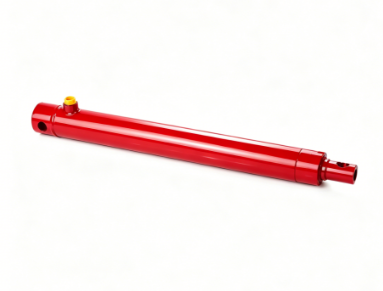
A single acting hydraulic cylinder uses hydraulic pressure to move the piston in only one direction. The return movement occurs through an external force such as:
Hydraulic oil enters through a single port, pushing the piston outward. Once hydraulic pressure is released, the piston returns to its original position through the external force.
The operating sequence is simple:
Because hydraulic power is applied only during extension, the design remains relatively simple and economical.
A built-in spring retracts the piston after pressure release.
Applications include:
The weight of the load returns the piston.
Applications include:
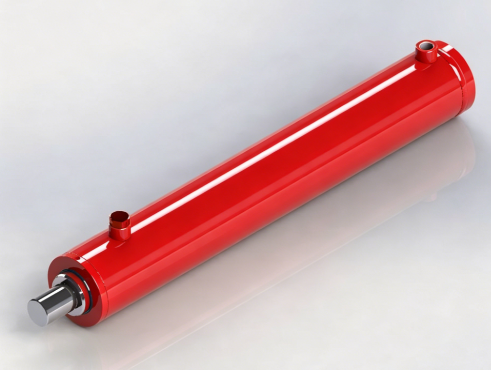
A double-acting hydraulic cylinder uses hydraulic pressure for both extension and retraction.
It contains two hydraulic ports:
Hydraulic fluid alternately enters each side of the piston, allowing complete control of movement in both directions.
The operating process includes:
Hydraulic oil enters the cap end of the cylinder, pushing the piston rod outward.
Hydraulic oil enters the rod end, pulling the piston back into the cylinder.
Because pressure is applied in both directions, operators can precisely control speed, force, and positioning.
| Feature | Single-Acting Cylinder | Double-Acting Cylinder |
|---|---|---|
| Hydraulic Ports | One | Two |
| Powered Movement | One Direction | Both Directions |
| Return Method | Spring, gravity, or load | Hydraulic pressure |
| System Complexity | Lower | Higher |
| Installation Cost | Lower | Higher |
| Force Control | Limited | Full control |
| Maintenance | Simpler | More components |
| Typical Applications | Lifting and pressing | Continuous machine motion |
Single acting cylinders contain fewer internal components and hydraulic connections.
This simplicity often leads to:
Since only one hydraulic port is required, supporting hydraulic circuits are generally less expensive.
The system may require:
Many small machines benefit from compact hydraulic arrangements where a return spring or gravity can handle retraction.
For applications involving straightforward pushing, lifting, or pressing actions, single-acting cylinders often provide sufficient performance.
Hydraulic force is available during both extension and retraction.
This allows:
Machines performing repetitive motions often require force in both directions.
Examples include:
Unlike single acting hydraulic systems, double-acting designs do not depend on gravity or springs for retraction.
Performance remains consistent regardless of machine orientation.
Operators can regulate movement in both directions through flow control valves.
This results in smoother operation and greater precision.
Despite their benefits, single-acting cylinders have several limitations.
Without gravity, springs, or load weight, the piston cannot retract effectively.
Only extension force is actively controlled.
Retraction speed may vary depending on external conditions.
Applications requiring frequent bidirectional motion generally benefit from double-acting designs.
Additional ports, seals, hoses, and control valves increase overall system expense.
Hydraulic plumbing becomes more involved because pressure must be supplied to both sides of the piston.
More seals and hydraulic connections create additional maintenance considerations.
Single acting cylinders are frequently used in applications where force is primarily needed in one direction.
Examples include:
Hydraulic pressure raises the truck bed, while gravity lowers it.
The cylinder lifts loads using hydraulic force and retracts after pressure release.
Many farm implements rely on simple lifting functions.
Spring-return cylinders hold and release components during manufacturing processes.
Pressing force is applied hydraulically, while springs handle return movement.
Double-acting hydraulic cylinders are widely used in demanding industrial environments.
Booms, arms, and buckets require controlled movement in both directions.
Loaders, cranes, and earthmoving equipment depend on bidirectional hydraulic force.
Production lines often require repeated extension and retraction cycles.
Forklifts and lifting systems benefit from precise control.
Hydraulic systems frequently operate in varying positions where gravity cannot be relied upon.
Selecting the right cylinder depends on several factors.
Modern hydraulic systems increasingly focus on:
Manufacturers now integrate sensors, position feedback systems, and advanced sealing technologies into both single-acting and double-acting hydraulic cylinders.
These developments improve equipment reliability while helping operators monitor performance in real time.
A single-acting cylinder uses hydraulic pressure in one direction and relies on an external force for return. A double-acting hydraulic cylinder uses hydraulic pressure for both extension and retraction.
Single acting cylinders are commonly used in dump trucks, hydraulic jacks, clamping systems, agricultural machinery, and lifting applications.
Generally, yes. They require fewer hydraulic components and simpler control systems, resulting in lower equipment and installation costs.
It can, but an alternative return force such as a spring may be needed because gravity may not assist retraction.
Excavators require controlled force during both extension and retraction, making double-acting cylinders the preferred choice.
Single-acting cylinders often have fewer components and hydraulic connections, which can simplify maintenance.
Not necessarily. Force output depends on cylinder size and hydraulic pressure. However, double-acting cylinders can apply force in both directions.
Service life varies according to operating conditions, maintenance practices, contamination control, and seal quality. Well-maintained cylinders can operate for many years before major repairs are required.
Both single acting hydraulic cylinders and double-acting hydraulic cylinders offer distinct advantages. Single acting cylinders provide a cost-effective solution for lifting, pressing, and other one-direction applications. Double-acting designs offer greater control, flexibility, and performance for demanding industrial operations.
The best choice depends on system requirements, operating conditions, available return forces, and long-term performance expectations. By understanding the strengths and limitations of each design, engineers and equipment owners can select hydraulic cylinders that match their operational goals and maximize efficiency.


