
Selecting the correct hydraulic cylinder bore size is one of the most important steps when designing or maintaining a hydraulic system. The bore directly affects the force a cylinder can generate, while factors such as working pressure, rod diameter, stroke length, and mounting style determine how the cylinder performs in real operating conditions.
Whether you are replacing an existing cylinder or designing new equipment, understanding bore sizing helps improve efficiency, reliability, and equipment performance.
This guide explains what cylinder bore means, how to calculate the required bore size step by step, and the factors that influence hydraulic cylinder selection.
The cylinder bore is the inside diameter of a hydraulic cylinder barrel. Together with hydraulic pressure, the bore determines the output force of the cylinder. A larger bore produces greater force at the same pressure, while a smaller bore generally provides faster movement with lower fluid consumption. Proper bore sizing depends on the required force, operating pressure, application, and cylinder configuration.
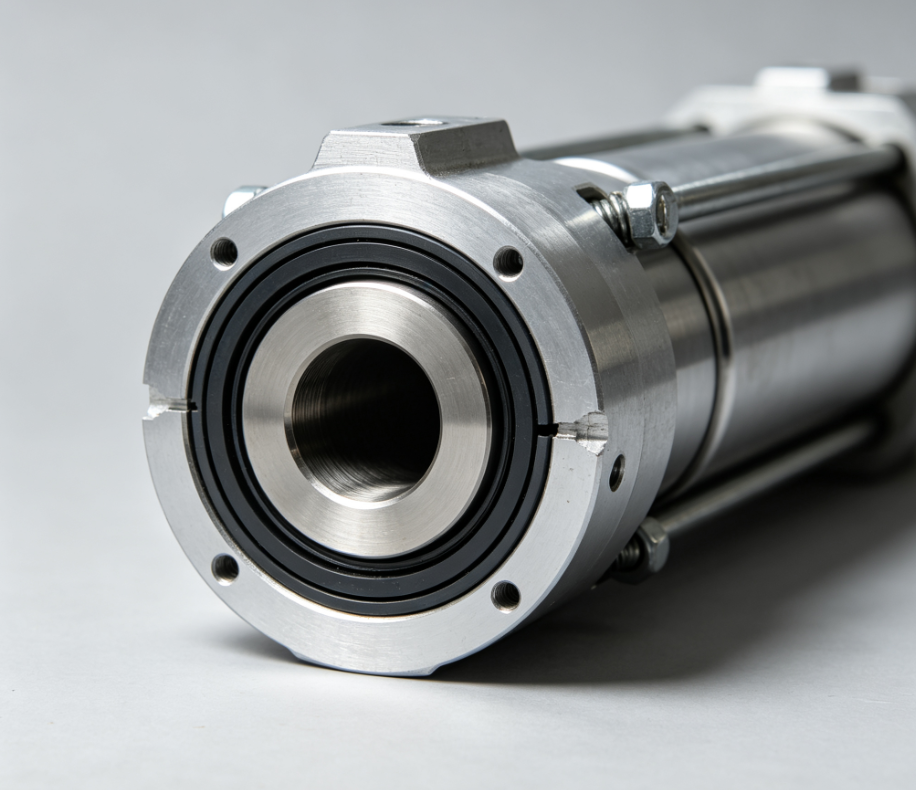
The cylinder bore refers to the internal diameter of the cylinder tube where the piston moves.
When pressurized hydraulic fluid enters the cylinder, pressure acts across the piston area. Since piston area increases as bore diameter becomes larger, output force also increases.
The relationship is straightforward:
Selecting the correct bore is therefore one of the first decisions when specifying a type of hydraulic cylinder.
Hydraulic cylinders convert the energy of hydraulic fluid into linear motion.
The process works as follows:
The available force depends mainly on:
Cylinder force is calculated using:
Force = Pressure × Piston Area
Since piston area depends on the cylinder bore, even a small increase in bore diameter can produce a significant increase in output force.
For example:
Produces substantially less force than:
Because piston area increases with the square of the bore diameter.
Choosing the correct bore requires more than simply selecting the largest available cylinder.
Calculate the maximum load that the cylinder must move.
Include:
Identify the available working pressure of the hydraulic system.
Most industrial systems operate between 140 and 350 bar, although some high pressure applications exceed this range.
Using the required force and system pressure, calculate the piston area needed.
The resulting piston area determines the minimum cylinder bore.
The rod diameter must withstand compression, tension, and buckling loads.
An undersized rod may bend during operation, particularly on long strokes.
The required stroke length equals the total travel distance needed by the machine.
Choosing a stroke longer than necessary increases cylinder size and weight.
Check the following dimensions before finalizing the cylinder:
The stroke length is the distance the piston travels from the fully retracted position to the fully extended position.
Longer strokes increase:
Proper stroke selection improves both performance and equipment packaging.
Two dimensions are often confused.
The retracted length is the overall cylinder length when the piston rod is fully retracted.
This dimension determines whether the cylinder fits inside the available installation space.
The extended length is the overall cylinder length when the piston rod reaches full extension.
Equipment designers use this dimension to verify that the cylinder provides sufficient travel without interfering with surrounding components.
The rod diameter affects both strength and stability.
Larger rods provide:
Smaller rods reduce weight but may not withstand heavy compressive loads.
Proper rod sizing is especially important for long-stroke cylinders.
Most industrial cylinders use chrome plated piston rods.
Chrome plating provides several advantages:
These benefits make chrome plated rods common in construction, mining, agriculture, and manufacturing equipment.
Higher hydraulic pressure allows smaller cylinders to generate greater force.
However, increasing pressure also increases stress on:
Both bore size and pressure should be considered together during cylinder selection.
Different applications require different cylinder constructions.
Tie rod cylinders use threaded steel tie rods to secure the cylinder barrel and end caps.
Advantages include:
They are commonly used in factory automation and industrial machinery.
Welded cylinders have end caps permanently welded to the barrel.
Compared with tie rod cylinders, they generally offer:
They are widely used in construction machinery, excavators, loaders, and agricultural equipment.
The appropriate type of hydraulic cylinder depends on several factors.
Consider:
No single cylinder design is suitable for every application.
Proper port sizes ensure sufficient hydraulic fluid flow.
Ports that are too small may result in:
Oversized ports generally provide little benefit if the hydraulic circuit limits flow elsewhere.
The performance of a hydraulic system also depends on selecting the correct hydraulic fluid.
Important properties include:
Regular fluid maintenance helps extend cylinder life and maintain stable performance.
Typical industrial hydraulic cylinders are available in bore sizes such as:
Larger bores are commonly used for heavy industrial and mobile hydraulic equipment.
Hydraulic cylinders are used in:
Proper bore sizing improves efficiency across all these applications.
Routine inspection helps maximize cylinder service life.
Recommended maintenance includes:
Regular maintenance reduces unexpected downtime and extends equipment life.
The cylinder bore is the inside diameter of the hydraulic cylinder barrel. It determines the piston area and directly affects the amount of force generated.
A larger cylinder bore provides a larger piston area. At the same hydraulic pressure, this allows the cylinder to produce more output force.
The stroke length is the distance the piston travels. The extended length is the total overall length of the cylinder when fully extended.
The rod diameter determines the strength and stability of the piston rod. Larger rods are better suited for long strokes and heavy compressive loads.
Tie rod cylinders use external threaded rods to hold the cylinder together, making them easy to service and commonly used in industrial hydraulic systems.
Welded cylinders have a compact welded construction that offers high strength and durability. They are frequently used in heavy-duty mobile equipment.
Always use the hydraulic fluid recommended by the equipment manufacturer. The correct fluid depends on operating temperature, pressure, seal materials, and system design.
Understanding hydraulic cylinder bore selection helps engineers and equipment owners choose cylinders that match the required force, available working pressure, installation space, and operating conditions. By evaluating bore sizing, rod diameter, stroke length, port sizes, hydraulic pressure, and the appropriate type of hydraulic cylinder, it is possible to build a more efficient and reliable hydraulic system.
Whether selecting tie rod cylinders for industrial machinery or welded cylinders for demanding mobile equipment, choosing the right bore size and maintaining clean hydraulic fluid are key to long-term performance.


