
A hydraulic cylinder is a mechanical actuator that converts the energy of pressurized hydraulic fluid into linear force and motion. It is one of the most widely used components in a hydraulic system, powering equipment in construction, agriculture, manufacturing, mining, and material handling industries.
From lifting heavy loading equipment to moving industrial machinery, hydraulic cylinders provide controlled force through a relatively simple operating principle. Understanding how a hydraulic cylinder works helps engineers, maintenance personnel, and equipment owners select the right cylinder for specific applications.
A hydraulic cylinder works by using pressurized hydraulic fluid to create force inside a cylinder barrel. The fluid enters the cylinder through a port, pushing against a piston. As pressure builds, the piston moves, causing the piston rod to extend or retract. This movement generates linear force and motion that can lift, push, pull, or position heavy loads.
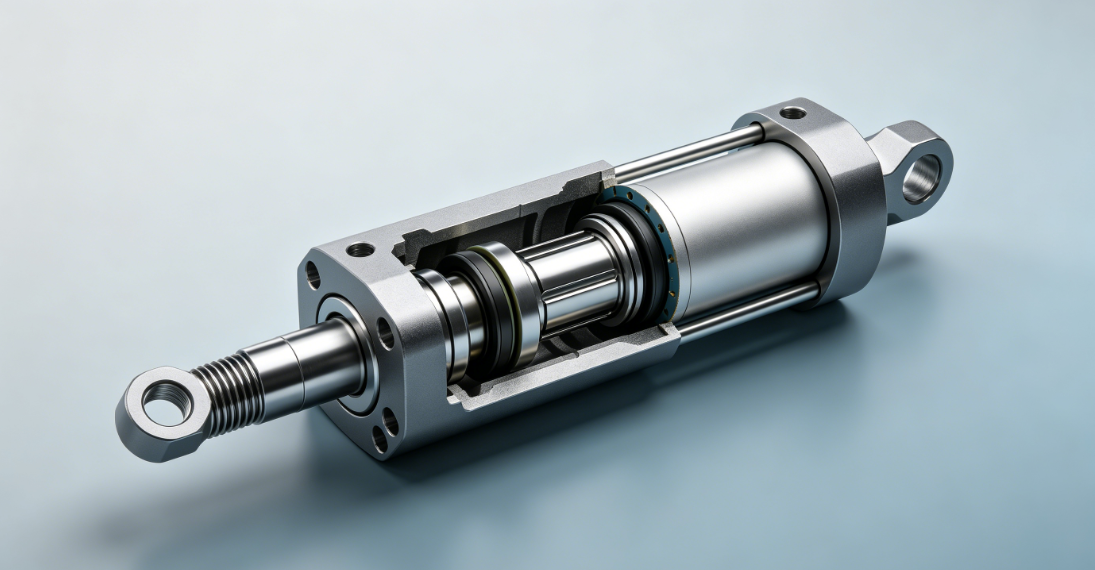
A hydraulic cylinder is a fluid power device designed to produce straight-line movement. Unlike electric motors that generate rotational motion, hydraulic cylinders create linear force and motion directly.
The main purpose of a hydraulic cylinder is to transform hydraulic energy into mechanical work. Hydraulic systems use pumps to move hydraulic fluid under pressure, and the cylinder converts that pressure into usable force.
Hydraulic cylinders are commonly found in:
To understand cylinder working principles, it is important to know the major components.
The cylinder barrel houses the piston and hydraulic fluid. It is designed to withstand high pressure during operation.
The piston separates the cylinder into two chambers. Hydraulic pressure acting on the piston generates movement.
The piston rod transfers force from the piston to the external load. Many rods feature a chrome plated surface to improve wear resistance and reduce corrosion.
End caps seal both ends of the cylinder and help maintain pressure within the assembly.
Seals prevent hydraulic fluid leakage and help maintain operating efficiency.
Ports allow hydraulic fluid to enter and exit the cylinder chambers.
A hydraulic pump creates pressurized hydraulic fluid within the hydraulic system.
The pressurized hydraulic fluid enters one side of the cylinder through a designated port.
As hydraulic fluid fills the chamber, pressure acts against the piston surface.
The force generated by the pressure causes the piston rod to move outward. This process is known as rod extending.
The extending rod applies force to the connected machine component, allowing lifting, pushing, or positioning operations.
When hydraulic fluid is directed to the opposite side of the piston, the rod retracts back into the cylinder.
This cycle repeats continuously during equipment operation.
Hydraulic cylinder output force depends primarily on:
The force formula is:
Force = Pressure × Piston Area
A larger bore size creates a larger piston area, allowing more force to be generated at the same pressure level.
For example:
| Bore Size | Pressure | Approximate Force |
|---|---|---|
| 50 mm | 200 bar | Lower Force |
| 100 mm | 200 bar | Higher Force |
| 150 mm | 200 bar | Much Higher Force |
This relationship explains why heavy-duty machinery often uses cylinders with large bore diameters.
Several cylinder designs are available depending on application requirements.
Single acting cylinders use hydraulic pressure in only one direction.
Characteristics:
Applications include:
Double acting hydraulic cylinders use hydraulic pressure for both extension and retraction.
Characteristics:
Applications include:
Among all cylinder designs, double acting hydraulic cylinders are the most widely used.
Hydraulic cylinders are often classified by construction style.
Welded cylinders feature a barrel directly welded to the end caps.
Advantages:
Common applications:
A tie rod cylinder uses external tie rods to secure the end caps to the cylinder barrel.
Advantages:
Common applications:
Both welded cylinders and tie rod cylinder designs are widely used depending on maintenance and space requirements.
Stroke length refers to the maximum distance the piston rod can travel between fully retracted and fully extended positions.
Factors influencing stroke length selection include:
Longer stroke lengths allow greater travel but may require larger mounting areas and stronger rod support.
Most hydraulic cylinder rods are chrome plated because chrome surfaces offer:
For cylinders operating in outdoor or harsh environments, chrome plating helps maintain long-term reliability.
Hydraulic cylinders support countless industries.
Material handling systems depend heavily on hydraulic cylinders for lifting, tilting, and positioning loads.
Examples include:
Industrial production equipment uses hydraulic cylinders for:
Farm machinery uses hydraulic cylinders to control:
Damaged seals may allow hydraulic fluid to escape.
Bent or scratched rods can accelerate seal wear.
Internal leakage reduces cylinder efficiency and force output.
Dirty hydraulic fluid can damage seals, pistons, and cylinder surfaces.
Moisture and environmental exposure may affect rods and cylinder barrels over time.
Routine maintenance helps prevent these issues and extends service life.
When choosing a hydraulic cylinder, consider:
Proper sizing helps ensure safe and efficient performance.
A hydraulic cylinder converts hydraulic energy into linear force and motion, allowing machines to lift, push, pull, or position loads.
Pressurized hydraulic fluid pushes against the piston surface. The resulting pressure generates force that moves the piston and rod.
Single acting cylinders use hydraulic pressure in one direction only, while double acting hydraulic cylinders use hydraulic pressure for both extension and retraction.
Bore size refers to the internal diameter of the cylinder barrel. Larger bore sizes generate greater force at the same pressure level.
Chrome plated rods resist wear, reduce corrosion, lower friction, and improve seal life.
Stroke length is the total distance the piston rod travels between fully retracted and fully extended positions.
A tie rod cylinder uses external tie rods to hold the cylinder assembly together, making maintenance and repairs easier.
Welded cylinders are commonly used in construction, agricultural, mining, and mobile hydraulic equipment.
Hydraulic cylinders remain one of the most effective methods of generating linear force and motion in modern machinery. By using pressurized hydraulic fluid within a hydraulic system, these fluid power devices can move heavy loading equipment with precision and reliability. Whether using welded cylinders, tie rod cylinders, single acting designs, or double acting hydraulic cylinders, understanding cylinder working principles helps users choose the right solution for demanding industrial applications.


