
Construction machinery operates in demanding environments where reliability, precision, and efficiency directly affect project timelines and operating costs. Standard hydraulic packages often work for general applications, but heavy equipment used in real job sites rarely operates under “standard” conditions. That is why manufacturers and fleet owners increasingly turn to OEM hydraulic solutions designed specifically for each machine and working scenario.
This article explains how custom hydraulic systems enhance the performance of construction vehicles, including the Excavator, Wheel Loader, Aerial Work Platform, and Mining Truck, and how engineering customization leads to better productivity, durability, and energy efficiency.
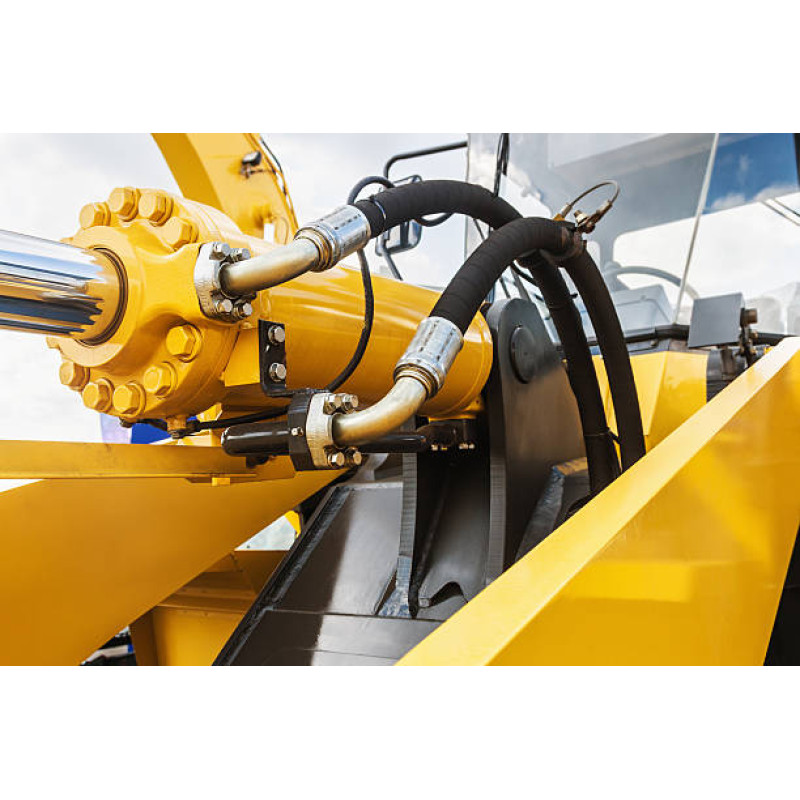
Before exploring customization, it helps to start with the basics of understanding hydraulic technology.
Hydraulics systems work by transmitting power through fluid pressure. When hydraulic oil (also called hydraulic fluid) is pressurized by a hydraulic pump, the energy moves through hoses and pipelines to actuators such as a hydraulic cylinder or motors. These components convert pressure into mechanical force that moves arms, buckets, lifting platforms, or steering systems.
A typical construction vehicle hydraulic setup includes:
This combination allows machines to lift heavy loads, operate under high pressure, and perform repetitive tasks with precision.
Standard hydraulic units are designed for average workloads and typical operating environments. Real-world construction work rarely matches those assumptions.
Common challenges include:
A generic system may function, but performance losses appear over time: slower cycle speeds, overheating, excessive wear, and rising fuel consumption.
Custom engineering addresses these gaps directly.
A custom solution is engineered based on actual machine data and operating conditions. Engineers evaluate:
The final result is a hydraulic system designed to match the machine instead of forcing the machine to adapt to the hydraulic system.
Properly sized pumps, optimized control valves, and tailored hydraulic cylinder geometry improve motion response and accuracy.
Benefits include:
Precision is especially important for machines that perform repetitive tasks all day.
Energy loss often occurs when flow and pressure are mismatched. Custom engineering optimizes pump displacement, valve configuration, and pipe routing to reduce internal losses.
This leads to:
Closed-loop designs are increasingly used to achieve these gains.
A closed loop circuit recirculates hydraulic fluid directly between the pump and motor instead of sending it back to the tank after every cycle.
Advantages include:
Closed loop configurations are common in machines that require continuous motion or high responsiveness.
Construction machinery frequently works in:
Customized filtration, cooling, and sealing systems protect the hydraulic fluid and prevent premature wear.
Reliability improvements translate into:
Heavy equipment must lift and move massive loads safely and repeatedly. Custom hydraulic cylinders and reinforced components ensure safe operation under high pressure conditions.
Engineering considerations include:
This is especially important for machines handling large scale material movement.
Excavators rely on fast, powerful motion for digging and material handling.
Custom improvements include:
Wheel loaders perform constant loading and unloading operations.
Customization focuses on:
Safety and precision matter most for elevated work.
Custom hydraulic design provides:
Mining vehicles operate under extreme loads and long working hours.
Custom hydraulic solutions support:
Custom engineering requires upfront design work, but long-term financial advantages are significant.
Lower total cost of ownership comes from:
Over years of operation, these savings far exceed initial customization costs.
A hydraulic system uses pressurized hydraulic oil to generate motion and force. Pumps create fluid pressure, and actuators such as hydraulic cylinders convert that pressure into mechanical movement.
OEM solutions are designed specifically for a machine’s workload, environment, and duty cycle. This improves efficiency, reliability, and long-term cost savings.
A closed loop circuit circulates hydraulic fluid directly between the pump and motor, improving efficiency, reducing heat, and providing faster response.
Excavators, wheel loaders, aerial work platforms, and mining trucks benefit significantly due to heavy loads, high pressure operation, and long working hours.
Hydraulic fluid transfers energy, lubricates components, and removes heat. Proper fluid selection and filtration are essential for reliability and longevity.
Custom hydraulic engineering transforms how construction vehicles perform in real working environments. By tailoring hydraulic systems to each machine’s load profile, operating conditions, and duty cycle, manufacturers can achieve higher efficiency, better reliability, and improved productivity.
For companies operating heavy equipment daily, customized hydraulics is not a luxury—it is a practical strategy to improve performance and reduce long-term operating costs.


