
A boom hydraulic cylinder is a core linear actuator used in construction machinery to raise, lower, and position the boom during operation. It converts hydraulic pressure into mechanical force, enabling excavators, cranes, loaders, and similar equipment to lift heavy loads and maintain controlled movement under demanding working conditions.
Boom cylinders are widely applied in excavators, truck cranes, loaders, and lifting platforms, where stable motion, controlled speed, and reliable sealing performance are required.
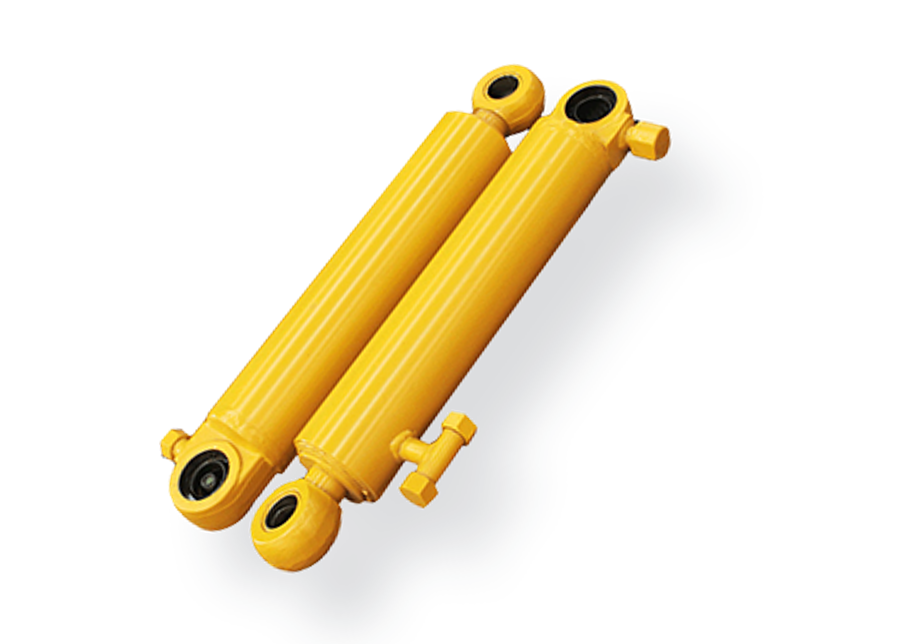
A boom hydraulic cylinder operates by directing pressurized hydraulic fluid into the cylinder chamber, pushing the piston and moving the rod in a linear direction. By reversing the fluid flow, the cylinder can retract or extend depending on its configuration.
Most boom cylinders are designed as a double acting hydraulic cylinder, allowing controlled motion in both extension and retraction. In some specific applications, single acting cylinders are used, where hydraulic pressure moves the piston in one direction while gravity or external force enables the return stroke.
A standard boom hydraulic cylinder consists of:
High-quality boom cylinders often feature a chrome plated piston rod, which improves wear resistance, corrosion protection, and surface smoothness, especially in outdoor and heavy-duty environments.
Welded cylinders feature a compact structure with welded end caps, offering high strength and good performance in limited installation spaces. They are widely used in excavators and mobile construction machinery due to their durability and vibration resistance.
Tie rod cylinders use threaded steel rods to hold the end caps in place. They are easier to disassemble and maintain, making them common in industrial and stationary hydraulic systems, although less frequent in excavator boom applications.
Most modern excavators use double acting hydraulic cylinders for boom functions to ensure controlled movement under varying load conditions.
The rod diameter directly influences the cylinder’s strength, load-bearing capacity, and resistance to bending. A larger rod diameter provides:
Selecting the correct rod diameter is essential when designing or replacing boom hydraulic cylinders for excavators or cranes.
Boom hydraulic cylinders are used across various types of equipment, including:
They are suitable for a wide range of working conditions, from urban construction to mining and port operations.
When selecting a boom hydraulic cylinder, consider:
Choosing the correct configuration ensures stable performance and reduces maintenance frequency.
A boom hydraulic cylinder is used to raise and lower the boom of construction machinery, allowing controlled lifting, positioning, and load handling.
Most boom hydraulic cylinders in excavators are double acting hydraulic cylinders, while single acting types are used in simpler lifting systems.
Chrome plated rods improve wear resistance, corrosion protection, and surface smoothness, extending service life in harsh environments.
Welded cylinders are compact and suitable for mobile machinery, while tie rod cylinders are easier to service and commonly used in industrial applications.
A larger rod diameter increases load capacity, bending resistance, and overall stability during heavy-duty operation.
A boom hydraulic cylinder is a fundamental component in modern lifting and earthmoving equipment, designed to handle heavy loads with stable and controlled motion. With various configurations such as welded cylinders, tie rod cylinders, single acting, and double acting designs, boom cylinders can be adapted to a wide range of machinery and working conditions. Selecting the right structure, rod diameter, and surface treatment such as chrome plating ensures reliable performance and long service life.


